Showing posts with label Hard Problem of Consciousness. Show all posts

Wednesday, January 22, 2020

Consciousness: The Key to Non-Duality

Like clay in the modifications of clay, like gold in the modifications of gold, like thread in woven fabrics, so is the Infinite, the all-preceding, all-pervading Consciousness. It is without origin, without end, unchangeable and present in all phenomena. Ananda is the essence of all happiness flowing from Consciousness, the oceanic bliss in which all creatures are grounded.” (Anonymous, Sarvasāra Upanishad)

“To desire something other than this immediately present Consciousness is like having an elephant at home and still look for its footprints elsewhere... Thus it is that if you do not understand that everything comes from Consciousness, it will not be possible to achieve Buddha-hood... If you do not see that your own Consciousness is actually the Buddha, Nirvana will remain hidden.” (Padmasambhava,
Self-Liberation Through Seeing With Naked Awareness)

“Through Her own Will, Consciousness unfolds the universe on the canvas that She Herself is... When this is fully seen, the mind – by turning inward – is expanded and revealed as
pure Consciousness... By thus realizing your innate potential, you absorb the entire universe within yourself.” (Rajanaka Kshemaraja, The Recognition Sutras
)

Non-Duality and Idealism
As the quotes above indicate, Consciousness plays a central role in the main forms of Eastern non-dual spirituality, namely Advaita Vedanta (first quote), Buddhism (second quote) and Shaivite Tantrism (third quote). Why? Why is Consciousness the key to non-duality? The short answer is: because, according to these traditions, our entire reality – i.e. everything we can experience and understand – exists only in Consciousness. All things, material objects no less than thoughts and feelings, can appear to us only in Consciousness. In this way, Consciousness is all-embracing, the Whole,
the Brahman”, the “One without second,” as the Upanishads say.

If you then realize that you
are that Consciousness, that you are the One in which all things appear, you will see that you essentially coincide with the Whole, that you are the all-embracing, boundless space in which everything takes place. Everything is One; and that all-embracing One is Consciousness; and that Consciousness is you at your innermost core. This realization is the seed of Enlightenment, the realization of your true nature and the liberation from suffering. Your essence can no longer be touched by the things and events in the world, because from now on you know yourself as “That” which precedes the world, namely the Consciousness in which the world appears.

Immanuel Kant (1724-1804)
In philosophy, the idea that “everything is Consciousness” is known as Idealism – an idea that is also found in Western philosophy (in philosophers such as Berkeley and Kant and the contemporary thinker Bernardo Kastrup). The opposite view, Materialism, says that ultimately everything consists of matter, i.e. atoms, molecules, quarks, photons, etc. According to Materialism, Consciousness is nothing more than a by-product of material-mechanical processes, such as Darwinian evolution and electrochemical activity in the brain. Idealism, on the other hand, states that what we experience as material objects is ultimately nothing more than that: a bundle of experiences in our Consciousness, sensory sensations that are (mistakenly) interpreted by our mind as objects existing outside of us. So where Materialism says: “Matter produces Consciousness”, Idealism makes the inverse statement: “Consciousness produces matter”.

Materialism: A philosophy of despair and conflict
The debate between Idealism and Materialism may seem abstract and academic, far removed from everyday life, but on closer inspection the opposite is true. From the Scientific Revolution in the 16th and 17th centuries onward, Materialism has steadily grown into the dominant worldview of Western civilization. As such, Materialism has exerted an enormous – and very harmful – influence in our culture. It is not for nothing that
the word “materialism” is synonymous with greed and the exclusive focus on material possessions. The most important cultural consequence of scientific Materialism has undoubtedly been modern individualism, an extreme form of the dualistic belief in the reality of the separate ego.

The seemingly separate ego experiences itself as detached from – and at odds with – an indifferent outside world, in which it must struggle to maintain itself. Materialism naturally leads to belief in separation because this philosophy sees Consciousness as a by-product of the brain. In that case, Consciousness is by definition tied to an individual and mortal body, and thus different from individual to individual. In this way, Materialism is in large part responsible for the suffering that the dualistic belief in separation entails: egoism, greed, exploitation, feelings of inferiority, hatred, abuse, violence… These are all thoughts, feelings and behavioral patterns that originate in the conviction that I – as this person, with this body and this mind – am nothing more than this individual being, separate from the other people around me, separate from nature, separate from the Universe, separate from the Divine...

Thus the Advaita teacher Rupert Spira (2017: 2) calls Materialism “a philosophy of despair and conflict, and, as such, the root cause of the unhappiness felt by individuals and the hostilities between communities and nations”. That is why the debate between Idealism and Materialism is not just theoretical and academic: ultimately, the fate of Western civilization is at stake here. The choice between Idealism and Materialism is the fundamental choice we have to make between universal unity and harmony on the one hand and the destructive effects of competitive individualism on the other. This is a particularly weighty choice in the light of the impending climate apocalypse and the continuing hardening of both society and international politics.

Non-duality not an intellectual game
Now, we could put forward a whole arsenal of theoretical arguments in favor of Idealism and against Materialism – for example, the fact that Materialism fails to explain Consciousness (which is known in philosophy as “the Hard Problem of Consciousness”), or the constitutive role of the observer in quantum mechanics, or the old epistemological argument that we cannot know anything outside of Consciousness (an argument found both in Western philosophers such as Berkeley and Kant and
in Eastern traditions such as Yogacara Buddhism and Shaivite Tantrism). From a theoretical perspective, such arguments are of course very important and – in my opinion – ultimately convincing.

But when it comes to Enlightenment through non-dual Consciousness, these arguments are less relevant. Non-duality is much more than just theory, and certainly not a purely intellectual game with philosophical subtleties. Non-dual spirituality is primarily about the
living realization of Enlightenment by directly experiencing the existential truth behind Idealism, i.e. by discovering oneself as the one Consciousness underlying everything and everyone.

This also indicates the
main difference between Western Idealism and the non-dual spirituality of the East. Although both see Consciousness as the ultimate reality, Western Idealism remains stuck in purely theoretical arguments and does not penetrate into the experiential dimension of Enlightenment, the direct intuition of non-dual Consciousness. Whereas it is precisely this redeeming experience that is the central motive of Eastern spirituality. In Advaita, Tantra and Buddhism, philosophical theory and rational argumentation are certainly not lacking, but they are secondary to the practical pursuit of Enlightenment. In his classic book Philosophies of India, Heinrich Zimmer aptly describes this difference between Western and Indian philosophy as follows:

“India [...] has had, and still has, its own disciplines of psychology, ethics, physics, and metaphysical theory. But the primary concern – in striking contrast to the interests of the modern philosophers of the West – has always been, not information, but transformation: a radical changing of man’s nature and, therewith, a renovation of his understanding both of the outer world and of his own existence; a transformation as complete as possible […]. The attitudes toward each other of the Hindu teacher and the pupil bowing at his feet are determined by the exigencies of this supreme task of transformation. Their problem is to effect a kind of alchemical transmutation of the soul. Through the means, not of a merely intellectual understanding, but of a change of heart (a transformation that shall touch the core of his existence), the pupil is to pass out of bondage, beyond the limits of human imperfection and ignorance, and transcend the earthly plane of being.” (Zimmer 1953: 4-5)

The Eastern contribution: Consciousness is not individual
In the following, therefore, I will not go into the many arguments that can be given for Idealism and against Materialism. Instead, I will focus on one specific argument from Eastern philosophy about the fundamental nature of Consciousness – an argument that directly touches on the experience of Enlightenment. It also addresses one of the main objections raised by Westerners when confronted with non-duality. As said, non-duality is about discovering yourself as the one, all-embracing Consciousness underlying everything and everyone. For most Westerners, that’s a rather absurd idea, trapped as they are in the – ultimately Materialistic – belief that Consciousness is always individual, because always tied to an individual body.

For Westerners, the Materialist assumption that Consciousness is in one’s head, and in particular in the brain, is very natural; it’s what they are brought up with. As said, if Consciousness is in the brain, then Consciousness is by definition of an individual nature, tied to an individual body. It is striking to see that even Western thinkers such as Berkeley and Kant have – despite their Idealism – not been able to escape this Materialist assumption of the individuality of Consciousness. In this respect, Eastern philosophy shows a very different and, above all, more consistent picture. For if we start from the plausible idea that the Consciousness necessarily precedes the phenomena appearing in it, then the strictly impersonal, pre-individual nature of Consciousness follows automatically.

After all, everything that characterizes you as you – your body, your thoughts, your feelings, your character, your social position, your country, your culture – all these things are objects perceived by Consciousness and
are therefore preceded by Consciousness. Consciousness is not in your head or brain, on the contrary: your head and brain are, as objects of experience, in Consciousness. Everything that individualizes us, everything that makes us into different individuals – bodies, thoughts, feelings, personal histories, etc. – all these things appear in Consciousness, which as such precedes all of them and is therefore not defined by any of them. The entire talk of “individual consciousness” is nonsensical.

It is only through Consciousness that can we see, feel, perceive, think, understand objects. Consciousness itself, therefore, is not one of those objects – that is to say: it is not a thing itself, and in that sense it is a kind of nothing, a “no-thing”. As Nisargadatta puts it: “Resolutely reject what you are not, till the real Self emerges in its glorious nothingness, its not-a-thing-ness.” (2009: 503) By thus realizing the true nature of one’s Consciousness, one ceases to experience oneself as a particular individual, limited in space and time. Rather, one transcends space and time, which are now seen as mere appearances in Consciousness. Thus Nisargadatta again: In reality time and space exist in you; you do not exist in them.” (2009: 196)

A widely used metaphor in Eastern philosophy is that Consciousness is the Light in which everything can appear. Of course, this is not about light in the physical sense of the word (a stream of photons), but about the ‘spiritual’ Light in which all objects (including photons) become manifest, i.e. perceptible, knowable and understandable. Therefore, Consciousness itself cannot be perceived or understood as an object: the pure Light in which all things appear cannot itself appear as a thing. In that sense, Consciousness itself is completely featureless, indefinite and formless.

Consciousness: a limitless void
Properties are always determined and as such different from other properties. Red is red because it is different from other colors, long is long because it is different from short, warm is warm because it is different from cold, and so on. In philosophy, this is often expressed in terms of Spinoza’s statement that “omnis determinatio est negatio”, that is, every determination (of a property) is a denial (of another property). In that sense, each property is necessarily finite because essentially limited by other properties. But properties can only appear to us in Consciousness, which is why Consciousness itself is without properties: it precedes all of them. Consciousness is therefore not finite as properties are: it is infinite, limitless...

This already shows that all individuals share the same universal Consciousness.
We have seen that Consciousness – as a condition for the appearance of objects – must itself be completely indeterminate and limitless, a kind of infinite ‘no-thing’ that precedes all ‘some-things’. But how many of such ‘no-things’ – how many indeterminate and limitless Consciousnesses – can there be? It is obvious that only one can exist. Because suppose there are several. How then do you compare them to each other? How do you compare multiple ‘no-things’? Clearly, this is impossible: these ‘no-things’ do not have any properties that can be used for comparison. Hence: there is only one Consciousness.
 
Put differently: if we were to say that ‘my’ consciousness differs from ‘your’ consciousness, then they must somehow have (different) properties. Our consciousnesses must then be limited in some way, for then there must be some kind of boundary between ‘my’ consciousness and ‘your’ consciousness. But how is that possible if Consciousness is indeterminate and limitless? Of course, you are aware of different things than I am. For example, you eat an apple while I drink a cup of tea; you feel cheerful while I am sad; you think of your grandmother, while I think of the pain in my back, etc. But these differences all concern the objects in Consciousness. That which perceives these objects, i.e. Consciousness itself, is exactly the same for both of us: featureless, boundless, formless... Seen in this way, I cannot distinguish ‘my’ Consciousness from ‘your’ Consciousness. The whole difference between ‘mine’ and ‘thine’ dissolves in the limitless void of pure Consciousness.

The “neti, neti” formula
Let us return to the fact that properties can only be determined in relation to each other, by differing from each other. This accounts for the famous phrase “neti, neti” (“not this, not this”) which traditionally denotes Consciousness in the Vedanta – an expression that is already found in the oldest Upanishad: “
With what means can one perceive that through which one perceives this whole world? About this Self one can only say “neti, neti”.” (Brihadaranyaka, 4.5.15)

This double negation indicates that Consciousness is not characterized by any property, therefore not by any property
A or by the opposite property non-A (from which A must differ in order to be A). For example, if I merely said “Consciousness is not large”, I would leave open – due to the relational nature of properties – the possibility that Consciousness is small. It is to exclude this possibility that the phrase “neti, neti” is used. Through this phrase it becomes clear that Consciousness is completely beyond the relational dimension of mutually limiting properties – as the Brihadaranyaka Upanishad (3.8.8) says: it is neither gross nor subtle, neither short nor long”, and so on.

Th
us, the non-duality of Consciousness does not just mean that there is no longer any subject-object duality (although that’s the main meaning of it); it also means that Consciousness is essentially beyond (or before) the dualities of our empirical, property-determined world. Consciousness is neither cold nor warm, neither large nor small, mind nor matter, male or female, good nor evil, etc.

The “groundless openness” of the space of Consciousness
Clearly, we are reaching the limits of language and conceptual thinking. How can one talk and think about something that has no properties, something indescribable, something ineffable? To meet this exigency, Advaita, Tantra and Buddhism empl
oy various metaphors to indicate the non-objectifiable essence of Consciousness. We have already got to know one of these metaphors, namely the Light in which all objects become visible, but which itself cannot be seen as an object.

A closely related metaphor is that of the empty sky or space in which material objects can find a place. That space necessarily precedes all objects and is therefore not an object itself. In that sense one can say that Consciousness “gives space” to all phenomena – or rather: it
is that space, that indefinite and infinite openness in which everything can appear. Enlightenment is about experiencing oneself as this infinite space in which everything happens.
 
Thus Nisargadatta often used to ask his visitors questions like: Have you ever felt the all-embracing emptiness in which the universe swims like a cloud in the blue sky?” (2009: 330) The Dutch Advaita philosopher Douwe Tiemersma, who also happened to be one of Nisargadatta’s students, aptly spoke of the “groundless openness”, i.e. the boundless and open space of Consciousness that is “groundless” because there is nothing outside of it and that therefore does not depend on anything (it is its own ground, one could say).

Of course, this is not about space in the scientific sense of the word, i.e. not the geometric space of mathematics or the physical space of physics. These spaces are objects
in Consciousness, since they can be studied scientifically. As such, they presuppose an even more fundamental space, the space of Consciousness in which they can appear as objects. In that sense, Consciousness is “the space behind space” or “the space around space”, i.e. the indefinite and groundless openness in which the geometric and physical spaces can first come to appearance. This is what the Chandogya Upanishad means with the following remarkable passage:

As immeasurable as the space around is this space in the Heart, which contains both the earth and the sky, both fire and wind, both the sun and the moon, both lightning and stars… Now, what is called space is that which generates name-and-form (nama-rupa). That in which they are grounded – that is Brahman; that is the Immortal, that is the Self.” (Chandogya Upanishad, 8.1.3 & 8.14)

Consciousness and Enlightenment
The last sentence of the above quote – “that is Brahman; that is the
Immortal; that is the Self” – points to the importance of the non-dualistic view of Consciousness for the ideal of Enlightenment in Advaita, Buddhism and Tantra. To begin with, we have to see that this indeterminate and limitless space of Consciousness is our deepest Self, or rather our deepest I. For the third-person form of “the Self” can create the dualistic impression that it is about something apart from us, standing over against us, a divine He, while the point is precisely the non-dualistic insight that we are “That” ourselves. After all, I am aware of all my experiences, feelings and thoughts. I am the observer to whom the world appears. I am the subject to which all objects appear but who can never become an object itself. In short, I am that featureless, boundless Consciousness that underlies and precedes all phenomena.

The seeing of this is what Enlightenment is, Awakening, the liberation of suffering. All experiences, thoughts, feelings appear in Consciousness, but they do not touch Consciousness; it remains featureless, formless, unmoved – just as a theater remains unmoved by the drama that takes place in it, or as a cinema screen is not touched by the film it displays. As the Brihadaranyaka Upanishad says, Consciousness is “
the one who is beyond hunger and thirst, beyond sadness and confusion, beyond old age and death” (3.4.2).

Although Advaita, Buddhism and Shaivite Tantrism place slightly different accents and use different terminologies, the essence is always the same insight, namely that you are primarily this non-dual Consciousness and not one of the limited phenomena that show up in Consciousness. In a following post I will elaborate on the relationship between Advaita, Buddhism and Tantra. The superficial differences that indeed exist between these traditions should not obstruct our view of the liberating core message they have in common.

References
-Heinrich Zimmer,
Philosophies of India, edited by Joseph Campbell, 1953, Routledge and Kegan Paul.
-
Nisargadatta, I Am That, edited by Sudhaker S. Dikshit, translated by Maurice Frydman, Chetana, 2009.
-Philip Renard,
Non-Dualisme: De Directe Bevrijdingsweg, 2005, Felix Uitgeverij (p. 103 for the Padmasambhava quote).
-Rajanaka Kshemaraja,
The Recognition Sūtras, translated and annotated by Christopher Wallis, 2017, Mattamayūra Press.
-Rupert Spira (2017),
The Nature of Consciousness: Essays on the Unity of Mind and Matter, Sahaja Publications.
-Wim van de Laar,
De Upanishads, translated and annotated by Wim van de Laar, 2015, Uitgeverij Nachtwind.


Wednesday, November 29, 2017

Prereflective Self-Consciousness: What’s it all about?

A central development in recent philosophy of mind is the increasing adherence to, and elaboration of, a distinction between reflective and prereflective self-consciousness. This development has gone hand in hand with a remarkable confluence and cross-pollination of different philosophical traditions, from phenomenology (notably the seminal contributions by Brentano, Husserl, and Sartre) and the Heidelberg School deriving from Henrich’s reading of Fichte, up to contemporary analytical philosophers of mind such as Levine, Kriegel, and Williford (for overviews, see Zahavi 1999; Kriegel & Williford 2006; Frank 2015). This degree of consensus between philosophers from very different theoretical backgrounds is remarkable and suggests that the concept of prereflective self-consciousness latches on to something real, a theory independent reality. In this post I explain the basic idea of prereflective self-consciousness, why we need to distinguish it from reflective self-consciousness, and the importance of this distinction to philosophy of mind at large.

M.C. Escher, Self-Portrait in a Spherical Mirror
The paradoxes of the reflection model
The easiest way to understand prereflective self-consciousness is by contrast with reflective self-consciousness, which is self-consciousness in the mode of ordinary object-consciousness. In reflective self-consciousness, the subject is aware of itself in much the same way it is aware of other objects in the world. The claim that object-consciousness suffices to explain self-consciousness is known as the “reflection model of self-consciousness”: it basically sees self-consciousness as resulting from a turning around (re-flection) of object-consciousness away from external objects and unto the subject itself. Despite its prominence in Western philosophy, notably in early modern philosophers from Descartes to Kant, the reflection model has come under increasing attack in philosophy since Kant. It has become increasingly clear that the reflection model suffers from a number of paradoxes, infinite regresses and vicious circles. To explain self-consciousness, then, reflection does not suffice: we must postulate a sui generis form of self-consciousness, different in kind from reflective object-consciousness. The adjective “prereflective” indicates this special type of self-consciousness.

Below I will discuss the paradoxes of the reflection model in more detail. For now, a few examples will suffice. To repeat: the reflection model explains self-consciousness as the redirection of object-consciousness away from external objects and unto the subject itself. But how does the subject know that its new object, of which it thus becomes aware, is indeed itself and not another external object? The difficulty is nicely illustrated by the example of Ernst Mach who, sitting in a Vienna bus, noticed “a shabby-looking school teacher” (“ein herabgekommener Schulmeister”) sitting across from him… until he realized he was looking in a mirror (Mach 1922: 3, n.1). The lesson is that mere object-consciousness, if it is accidentally turned towards the subject, does not intimate that the object one is aware of is indeed oneself – to achieve that self-awareness, a further act of the mind is required, a mental act irreducible to object-consciousness. Thus, the reflection model fails to explain self-consciousness.

The model can evade this difficulty only by claiming that the turning around of object-consciousness towards the subject happens by no means accidentally but with the intention to get the subject in view: the subject intends to know itself and therefore turns its object-consciousness towards itself. This solves the problem of failed self-recognition (as in the Mach example), since the object is intended as oneself from the start, but only at the price of circularity. For how can the subject intend to know itself by means of object-consciousness if it isn’t already aware of itself to some extent? If the subject were completely oblivious of itself, it could not even intend to know itself. As the analytical philosopher Sydney Shoemaker notes:

“[I]f one were aware of oneself as an object in such cases (as one is in fact aware of oneself as an object when one sees oneself in a mirror), this would not help to explain one’s self-knowledge. For awareness that the presented object was φ, would not tell one that one was oneself φ, unless one had identified the object as oneself; and one could not do this unless one already had some self-knowledge, namely the knowledge that one is the unique possessor of whatever set of properties of the presented object one took to show it to be oneself.” (Shoemaker 1984: 105)

The reflection model, then, can explain self-consciousness only by presupposing self-consciousness. Thus, the model either fails or is guilty of circularity. Of course, it is not to be denied that reflective self-consciousness is in fact possible: I can, and occasionally do, observe and think about myself as one object among the other objects that populate the world. The point is, however, that this reflective self-consciousness is facilitated by a pre-existing – and therefore pre-reflective – self-consciousness, in a mode different from object-consciousness. As Dan Zahavi notes: “[W]hen one does in fact succeed in taking oneself as an object, one is dealing with a self-objectification which in its turn presupposes a prior nonobjectifying self-awareness as its condition of possibility.” (Zahavi 1999: 6-7)

The self-registration view of consciousness
The primary motivation behind the notion of prereflective self-consciousness may be the correct understanding of self-consciousness as such, but it certainly is not the only motivation. The notion of prereflective self-consciousness is central to philosophy of mind in general because self-consciousness is taken to be crucial for consciousness as such. That is, even conscious states such as thinking about and perceiving an external object, say, a tree, although they are ostensibly not about the thinking and perceiving subject, nevertheless seem to presuppose self-consciousness. This claim, that all consciousness presupposes self-consciousness, and thus that self-consciousness is ubiquitous in all conscious states, is known as the Ubiquity Thesis (the term was coined by Kapitan 1999; following common usage, I will refer to this thesis as “Ubiquity”). If Ubiquity is correct, and if reflective self-consciousness presupposes prereflective self-consciousness, then the latter must be central to our understanding of consciousness in general. A closer look at Ubiquity supplies us with further evidence of the paradoxes ailing the reflection model and hence the need for a notion of prereflective self-consciousness.

Ubiquity is motivated by a particular view of consciousness which has been and still is fairly dominant in Western philosophy and cognitive science. We can call it the “self-registration view”. On this view, which has been elaborated in many different ways, consciousness is due to a special “internal monitoring” (Lycan 1997) or “self-registration mechanism” (Frank 2015) enabling the mind to register its own processes. On this view, then, a perception of an external object is conscious because not just the object is registered by the mind but also the perception itself. Likewise, a thought is conscious because not just the propositional content of the thought is registered but also the thought itself. Mental process that are not thus registered by the mind remain unconscious. Since self-registration of mental processes by the mind amounts to a form of self-consciousness, we can summarize this view by saying that self-consciousness underlies consciousness (= Ubiquity). In other words: a mental process becomes conscious because the mind is self-conscious with respect to that process, i.e. it is conscious of its own mental process, which thereby is a conscious process. As said, this view of consciousness has been and still is fairly dominant in philosophy and cognitive science. It can be traced back to Aristotle, who argues in different places of his work that mental processes are conscious because they have, besides their external objects, also themselves as objects (De Anima III, 2,425b, 12; Metaphysics Δ, 9). As Kenneth Williford notes: “Its distinguished history, prominence in careful descriptions of consciousness, and visible if disputed place in the philosophy of mind, AI, and neuroscience lend the claim substantial prima facie credibility.” (Williford 2006: 111)

Problems for the higher-order theory of consciousness
So how does the self-registration view of consciousness provide further evidence for the paradoxes of the reflection model and the subsequent need for a notion of prereflective self-consciousness? The point is that the self-registration view remains problematic as long as we operate within the reflection model of self-consciousness. On the reflection model, the mind’s awareness of a mental state, which lifts the latter into consciousness, is conceptualised as an additional mental state, separate from the first. Mental states are primarily aimed at external objects, and as such they are unconscious. They become conscious only insofar as the mind turns its attention away from those external objects and unto those mental states themselves. A mental state, then, is lifted into consciousness by an additional mental act of reflection. On closer inspection, however, this leads to several problems.

It leads, first of all, to the same problem of self-recognition that we first encountered in the Mach example: if one becomes aware of oneself as an object, how does one know that this object is oneself? One can recognize the object as oneself only if one already has self-awareness to some extent. Or, in terms of the self-registration view, how does the mind know that the mental state, of which it becomes aware through an additional reflection, is indeed its own mental state? Clearly, this already presupposes at least some minimal form of self-awareness, which must therefore be prereflective and in a mode different from object-consciousness. Secondly, the reflection model can be seen to lead to a vicious regress in the context of the self-registration view of consciousness. If a mental state becomes conscious only by becoming the object a further mental state, what then ensures that this second state is also conscious? On the reflection model, a third act would be required to lift the second act into consciousness, and a fourth act to lift the third into consciousness, and so on. It seems, then, that the self-registration view, when married to the reflection model of self-consciousness, can ‘explain’ consciousness only by accepting an infinite regress of higher-order mental states – which means, of course, that it cannot explain consciousness at all.

This regress argument against the reflection model in the context of Ubiquity – an argument first developed systematically by Fichte (1994: 111-12) and later by Brentano (1991: 153) – may well appear to be fatal. There is, however, a way out for the reflection model, although most philosophers would agree this is not an attractive solution. It is this: hold on to the claim that mental states are lifted into consciousness by higher-order states, but with the proviso that these higher-order states can themselves remain unconscious. A higher-order state can still become conscious by becoming the object of a still higher-order state, but the top (or, if you prefer, the bottom) of the hierarchy is by definition an unconscious state. With the above proviso in mind, this is no longer problematic. In this way, consciousness is grounded in the unconscious. This is the solution adopted by Higher-Order Representation (HOR) theories of consciousness, such as those proposed by Armstrong (1968) and Rosenthal (2005). HOR theorists, then, remain with the conceptual framework of the reflection model and work under the assumption that all the objections against this model can be defused theoretically.

As said, however, most philosophers find this solution to the regress problem questionable. It seems paradoxical to explain consciousness in terms of unconscious mental states. One objection that is often raised against the HOR explanation of consciousness in terms of unconscious mental states is that it violates Ubiquity. This thesis, after all, states that consciousness presupposes self-consciousness. But how can the unconscious registration of a mental state by a higher-order state be classified as self-consciousness? True, it is a form of self-registration, insofar as the mind registers its own mental states by means of higher-order states. But insofar as this self-registration remains unconscious, it is questionable whether it amounts to self-consciousness. The phrase “unconscious self-consciousness” is, after all, a clear contradiction in terms. Insofar as HOR theories aim to explicate Ubiquity, then, they seem to fail. As Williford writes: “Classic higher-order representation (HOR) theories do not really do justice to the phenomenology behind ubiquity… Such theories arguably push the self-representational aspect of consciousness into the unconscious and thus betray the likely original experiential motivation for their theories.” (Williford 2006: 111)

Is consciousness grounded in the unconscious?
One might come to the rescue of HOR theory by making a distinction between strong Ubiquity and weak Ubiquity. Whereas strong Ubiquity states that full-blown self-consciousness is necessary for consciousness, weak Ubiquity states that mere self-registration of mental states by the mind is required, where this self-registration can remain unconscious. There is something to be said for weak Ubiquity, and thus for HOR theory. Weak Ubiquity still conforms to the basic intuition behind the self-registration view of consciousness. Moreover, HOR theorists ask, what is the alternative? The only way to avoid both the regress of higher-order states and the grounding of consciousness in the unconscious is to accept the existence of mental states that are not just aware of other mental states (thereby lifting the latter into consciousness) but also of themselves. Only such mental states, that are aware of themselves, can do without higher-order states, as they lift themselves into consciousness by being self-conscious. But HOR theorists generally find this a paradoxical solution, and thus prefer their own solution of grounding consciousness in unconscious higher-order states, which they find – if not totally unparadoxical – at least less paradoxical. As David Armstrong puts it: “[I]
t is impossible that the introspecting and the thing introspected should be one and the same mental state. A mental state cannot be aware of itself, any more than a man can eat himself up.” (Armstrong 1968: 324) I will say more about this issue below.

In the final analysis, however, HOR theory remains unsatisfactory, for two reasons at least. First of all, we do not just want to explain consciousness, we also want to explain self-consciousness. Even if HOR theory succeeds in explaining consciousness in terms of the mind’s self-registration of mental states by higher-order mental states, the fact remains that this self-registration occurs unconsciously and therefore falls short of self-consciousness, since – as noted earlier – “unconscious self-consciousness” is clearly paradoxical. Self-consciousness, then, seems definitely out of the range of HOR theory. It is, moreover, questionable whether HOR theory can even explain consciousness, given the Hard Problem of Consciousness (HPC). The HPC seems to show that reductionism vis-à-vis consciousness is a dead end: it suggests that consciousness cannot be explained in terms of something else, i.e. something without consciousness, e.g. the brain as a purely physical object. But such reduction of consciousness to something else is precisely what HOR theory amounts to, as it explains conscious states in terms of unconscious higher-order states. This should come as no surprise, since HOR theories are often explicitly designed to facilitate a naturalist (i.e. materialist, physicalist) explanation of consciousness (hence the title of Armstrong’s 1968 classic, A Materialist Theory of Mind).

David Chalmers coined the term
"Hard Problem of Consciousness"
The question, then, comes down to how one stands towards the HPC: is it merely an extremely difficult problem which in the end can nevertheless be solved, or is truly insoluble? Can consciousness be reduced to something else, or is it irreducible? If one takes consciousness to be reducible, then HOR theory is, perhaps, still a viable option (if it can find an explanation for self-consciousness as well). Opinions on this will no doubt continue to differ in the foreseeable future, although there seems to be a growing majority leaning towards irreducibility. I, too, incline to irreducibility, but to argue for it here would far exceed the bounds of this blog post. In the following, therefore, I will simply assume the irreducibility of consciousness and investigate the consequences. It follows, of course, that HOR theory is off the table.  

The unavoidability of prereflective self-consciousness
Let’s take stock. The self-registration view of consciousness explains the latter in terms of self-consciousness: a mental state aimed at an external object is conscious because the mind is not just aware of the external object but also of the state itself. We saw, however, that the reflection model of self-consciousness fails: the reflective turning around of object-consciousness towards the subject cannot lead to self-knowledge, unless this reflection is guided by a prior self-consciousness, which is therefore prereflective and in a mode different from object-consciousness. Prereflective self-consciousness, then, is what we need to explain consciousness as such, in line with the self-registration view.

This also became apparent from the failure of HOR theory, where the reflection model returns in the idea that mental states are lifted into consciousness by additional reflections, i.e. higher-order states. We saw that HOR theory faces the problem of self-recognition: how does the mind know that the mental state, of which it is aware through a higher-order state, is its own mental state? Doesn’t this already presuppose self-awareness? We also saw that HOR theory faces a dilemma: either accept an infinite regress of higher-order states or accept that consciousness is grounded in unconscious higher-order states. Both horns of the dilemma are undesirable. An actual infinity of higher-order states not only violates the phenomenology of consciousness, it is also mysterious how a finite object such as the human brain can contain such infinite complexity. As for the second horn, the grounding of consciousness in the unconsciousness, we noted that this ignores the HPC.

So, to avoid both the regress and the grounding of consciousness in the unconscious, we have to accept the existence of mental states that are not just aware of other mental states (thereby lifting the latter into consciousness) but also of themselves. Only such mental states, that are aware of themselves, can do without higher-order states, as they lift themselves into consciousness, by being self-conscious. This is therefore what prereflective self-consciousness amounts to: a state of consciousness that is immediately aware of itself, unmediated by reflections.

David Armstrong: "A mental state
cannot be aware of itself, anymore
than a man can eat himself up."
Is prereflective self-consciousness paradoxical?
But how, then, should we respond to the objection, raised by HOR theory, that the notion of a mental state being aware of itself is incoherent? To repeat the earlier quote from David Armstrong: “[I]
t is impossible that the introspecting and the thing introspected should be one and the same mental state. A mental state cannot be aware of itself, any more than a man can eat himself up.” (Armstrong 1968: 324) Note, first of all, that this is just a dogmatic assertion, without real argumentation. Also, the comparison of a self-aware mental state with a man eating himself up goes limp. A man who would – per impossibile – eat himself up entirely would not only kill himself; he would disappear altogether. In that sense, eating oneself up is a form of total self-negation. But a self-aware mental state is not self-negating – on the contrary, it is rather self-affirming or even self-producing.

To be conscious of an object, after all, is judgmental in nature, in that (a) one is conscious of the object as existing, such that existence is – at least implicitly – affirmed of the object, and (b) one is aware of the object as having one or more properties, which are therefore also affirmed of the object. For example, when I take a walk in the countryside and I (veridically) see a tree, I see the tree as existing and as green, as leafy, as beautiful, etc. Likewise, then, when a mental state is self-aware, it is aware of itself as existing and as having certain properties (e.g. awareness of itself).

A self-aware mental state, then, is self-affirmative, i.e. the complete opposite of the self-negation inherent in eating oneself up. The latter is clearly paradoxical, but where is the paradox in self-affirmation? Whereas “I don’t exist” is obviously contradictory, “I exist” is a truism. Thus, I see no paradox in speaking of a self-aware mental state… unless, perhaps, one interprets the self-affirmation inherent in self-awareness in a strong ontological fashion as self-production, as Fichte notoriously did. But it is clear that the Fichtean concept of “self-positing” is not per se needed to understand the self-affirmation inherent in self-awareness. I will return to this issue at the end of this post.

Subject-object difference vs. subject-object identity
Is, then, Armstrong’s criticism of the notion of a self-aware mental state completely unfounded? No, but whatever plausibility it has at the same time makes clear why the reflection model of self-consciousness is inherently wrong. Let me explain. The intuitive plausibility of Armstrong’s criticism derives from the common idea that some kind of subject-object difference is intrinsic to all consciousness, such that the conscious subject is always different from the object of which it is conscious. Hence Armstrong’s bald statement that “it is impossible that the introspecting and the thing introspected should be one and the same mental state”. But – and this is what Armstrong overlooks – it is precisely this idea that underlies the inadequacy of the reflection model of self-consciousness. In fact, we can use the idea of subject-object difference to clarify what object-consciousness really is – a concept we haven’t properly defined yet. Object-consciousness, we can say, is intentional consciousness and is as such inherently wedded to subject-object difference. In intentional consciousness, the subject is invariably aware of an object as different from itself.

Self-consciousness, however, is essentially characterized by subject-object identity. In self-consciousness, the subject is its own object; thus, subject and object coincide, they are numerically identical. Hence the inadequacy of the reflection model. Object-consciousness and self-consciousness pull in different directions: the first pulls towards subject-object difference, the second towards subject-object identity. The reflection model has to bring about an identity by means of conceptual tools that imply difference – an obvious impossibility. Hence the many paradoxes ailing the model. It constantly has to undo or supress the difference which its concepts equally constantly generate. Already on this abstract level, then, we see that the reflection model is in principle incapable of explaining self-consciousness: the aspect of subject-object identity keeps eluding the difference engendering conceptuality of reflection – like the tail eluding the self-chasing dog.

The non-intentional nature of prereflective self-consciousness
That the subject-object distinction is indeed the root of all trouble for the reflection model becomes clearer when we take a closer look at the phenomenological concept of intentionality. Intrinsic to that concept is the idea that intentional consciousness is inherently “thetic” or “positional”, such that consciousness essentially purports to be about an independent object, i.e. an object existing independently from the consciousness aimed at it. This, of course, harks back to what I said earlier about the affirmative nature of consciousness, albeit that the phenomenological view of the positional nature of consciousness is stronger. On the phenomenological view, consciousness not just affirms the existence its object, it affirms that existence as independent from itself. Thus, intentionality is seen to imply a strong subject-object distinction. Phenomenologists put this by saying that the object is intended by consciousness as transcending consciousness. Husserl referred to this positing of objects as transcending our consciousness of them as “the natural attitude”. As Sartre (1972: xxvii) put it: “All consciousness is positional in that it transcends itself in order to reach an object.” It should be noted that such a concept of consciousness as ‘intending beyond itself’ is by no means unique to phenomenologists; many analytic philosophers held similar ideas, notably (and influentially) Moore with his notion of the diaphanous nature of consciousness as an argument for realism.

The point is that the failure of the reflection model becomes all the more obvious if we understand object-consciousness in this strong sense as intending its object as existing independently. If self-consciousness were “self-transcending” in that sense, it would have to posit its object, a mysterious entity called “the self”, as existing independently. But then, immediately, a new regress would arise. For since self-consciousness is obviously a property of this self, self-consciousness would have to posit the self as independently being self-conscious. That is: self-consciousness would then have to presuppose a prior self-consciousness on the part of its object, the self. And this prior self-consciousness, since it too would posit its object as existing independently, would also have to presuppose an already self-conscious self as its object, and so on indefinitely (cf. Sartre 1972: xxvi-xxix; Frank 1991: 226). Again, then, we see that the reflection model leads to a regress. Hence the conclusion, explicitly drawn by Sartre in particular, that prereflective self-consciousness is non-intentional, i.e. not committed to a strong subject-object distinction. Rather, in prereflective self-consciousness, the subject is aware of itself as strictly identical with itself. Or in terms of mental states, prereflective self-consciousness is a mental state that is aware of itself as itself, not as something different.

Final considerations: Prereflective self-consciousness and Idealist Monism
Earlier we noted that Fichte interprets the self-positing inherent in self-consciousness in a strong ontological fashion as self-creation. We now begin to see the motivation behind that idea. If we cannot see prereflective self-consciousness as aimed at the self as an independently existing object, then the self becomes a function of prereflective self-consciousness, i.e. the self only exists as the object of this self-awareness. In other words: a self is that particular self only because it is aware of itself as that particular person: Socrates, for example, is Socrates only because he takes himself to be Socrates. As such, the self-creating aspect of prereflective self-consciousness underlies the radical autonomy of the self, as Fichte stressed. Hence his claims to the effect that the self is the prereflective self-consciousness it has of itself and is as such self-creating.
As Fichte put it: “What was I, then, before I came to self-consciousness? The natural answer to this question is: I did not exist at all, for I was not an I. The I exists only insofar as it is conscious of itself.” (Fichte 1991: 98) This bootstrapping of the self through self-consciousness Fichte called “self-positing” (“Selbstsetzung”), saying things like: “the self begins by an absolute positing of its own existence” (Fichte 1991: 99). Note, by the way, that Fichte was not the first to draw attention to the self-creating power of self-consciousness. Similar ideas can already be found in Plotinus: see the previous post on this blog.

Baron von Münchhausen pulling him-
self from the swamp by his own hair.
Can self-consciousnss do the same?
We may take the idea that prereflective self-awareness is self-creating as its own reductio ad absurdum. But note that the idea appears in different light when we take into account the Hard Problem of Consciousness (HPC). For it seems clear, at least to me, that the HPC implies Idealist Monism, which I define as the claim that all of reality – including the physical – is ultimately explained in terms of consciousness. The irreducibility of consciousness obviously rules out Physicalist Monism (the claim that “everything is physical”), but it is consistent with both Idealist Monism and Ontological Dualism (i.e. the claim that reality consists of two different and separate substances, consciousness and matter). But when we also take the undeniable fact of mind-body interaction into account, the situation changes: Ontological Dualism falls away, and Idealist Monism is left as the only viable option. For if consciousness and matter are two different and separate substances, as Dualism maintains, then it is utterly mysterious how they can nevertheless interact (cf. the embarrassment of Descartes’ pineal gland). On an Idealist Monist reading, however, mind-body interaction is ultimately understandable as a form of mind-mind interaction, since Idealist Monism takes matter to be a manifestation of consciousness. But if we take Idealist Monism seriously, how then should we respond to Leibniz’ famous question: “Why is there something rather than nothing?” Note that on an Idealist Monist reading, Leibniz’ question should be rephrased as: Why is there consciousness, rather than nothing? Why does consciousness exist? And now the idea of the self-creating power of prereflective self-consciousness is suddenly not so absurd anymore…

References

-Armstrong, D.M. (1969), A Materialist Theory of Mind. Humanities Press: London & New York.
-Brentano, F. (1991), “Vom inneren Bewusstsein”, in: Frank 1991, 131-168.
-Fichte, J.G. (1991), Science of Knowledge with the First and Second Introductions. Edited and translated by Peter Heath and John Lachs. Cambridge University Press: Cambridge.
-Fichte, J.G. (1994), “An Attempt at a New Presentation of the Wissenschaftslehre (1797/98)”, in: Fichte, J.G. (1994), Introductions to the Wissenschaftslehre, translated and edited by Daniel Breazeale. Hackett Publishing Company: Indianapolis/Cambridge.
-Frank, M. (ed.)
(1991), Selbstbewußtseinstheorien von Fichte bis Sartre. Suhrkamp: Frankfurt am Main.
-Frank, M. (2015), Präreflexives Selbstbewusstsein: Vier Vorlesungen. Reclam: Stuttgart.
-Kapitan, T. (1999), “The Ubiquity of Self-Awareness”, in: Grazer Philosophische Studien 57, pp. 17-44.
-Kriegel, U. & Williford, K. (2006), Self-Representational Approaches to Consciousness. MIT Press: Cambridge Mass. & London.
-Lycan, W.G. (1997), “Consciousness as Internal Monitoring”, in: Block, N. & Flanagan, O. & Güzeldere, G. (eds.), The Nature of Consciousness: Philosophical Debates, pp. 755-71.
MIT Press: Cambridge, Mass.
-Mach, E. (1922),
Die Analyse der Empfindungen und das Verhältnis des Physischen zum Psychischen. Gustav Fischer: Jena.
-Rosenthal, D. M. (2005), Consciousness and Mind. Oxford University Press: Oxford.
-Sartre, J.-P (1972), Being and Nothingness: An essay on phenomenological ontology (transl. H.E. Barnes). Methuen & Co: London.
-Shoemaker, S. (1984), “Personal Identity: A Materialist’s Account”, in: Shoemaker, S. & Swinburne, R. (1984), Personal Identity. Blackwell: Oxford.
-Williford, K. (2006), “The Self-Representational Structure of Consciousness”, in: Kriegel & Williford (2006), pp. 111-42.
-Zahavi, D. (1999), Self-Awareness and Alterity: A Phenomenological Investigation. Northwestern University Press: Evanston, Illinois.


Wednesday, March 29, 2017

Leibniz's Question, the Crisis of Physicalism, and the Return of Absolute Idealism


Introduction
A recurrent theme on this blog is the idea that we need some notion of
self-causation in order to answer Leibniz’s famous question: “Why is there something rather than nothing?” If we define “reality” as the totality of what exists (including past and future existence), then by definition nothing exists outside of reality (not even ‘the nothing’). If we then presuppose the Principle of Sufficient Reason – that there is a sufficient reason for every fact, including the fact that reality exists – then it follows that the reason for reality’s existence must lie within reality itself, since there is nothing outside of it. And since we generally call the reason why something exists the cause of that something, we must conclude that reality has to be self-causing.

G.W. Leibniz (1646-1716)
In this post I will investigate this mysterious notion – the self-causation of reality – in light of the current crisis of materialism or what is nowadays rather known as physicalism, i.e. the ontology that takes (completed) physics as the final description of reality. It is a well-known fact that physicalism is presently under increasing attack, mainly by philosophers who point out the irreducibility of consciousness to a physicalist framework. Since self-causation is generally deemed impossible on a physicalist framework, the present crisis of physicalism means that the notion of self-causation gets a second chance.

Moreover, since it is
consciousness which is largely responsible for bringing on this crisis of physicalism, the question arises whether consciousness is perhaps the key to understanding the self-causation of reality. This takes us in the direction of Absolute Idealism, where the self-causing essence of reality is generally conceived of in terms of self-consciousness. Thus Absolute Idealism can be broadly summarized as the claim that reality exists because it is thought and/or experienced by an Absolute Mind, which in turn exists because It thinks/experiences itself. It is through its self-consciousness, therefore, that the Absolute Mind lifts itself into existence – at least according to such Absolute-Idealist thinkers such Plotinus, Shankara, Fichte, Schelling, Hegel and Royce.

In the final sections of this post I will discuss two common mistakes about Absolute Idealism: (1) that Absolute Idealism was first and foremost a creature of the 19th century, invented by post-Kantian German Idealists (Fichte, Schelling and above all Hegel) and then passed on to Anglo-American Idealists (Green, Bradley, McTaggart, Royce); and (2) that Absolute Idealism was refuted at the beginning of the 20th century by the founding fathers of Analytic Philosophy, Russell and Moore, as well as by empirical science, and that Absolute Idealism has henceforth become obsolete. Both mistakes will be corrected by taking a closer look, firstly, at the millennia-old history of Absolute Idealism in both Eastern and Western philosophy and, secondly, at the remarkable return of Absolute-Idealist themes in contemporary Analytic Philosophy and physics.

Plotinus: The originator of self-causation in Western philosophy
As noted in the Introduction, we need the notion of self-causation in order to answer Leibniz’s famous question: “Why is there something rather than nothing?” Since there is nothing outside of reality as a whole, the reason for its existence can only lie within reality itself. In that sense, then, reality must be self-causing. This argument is nothing new and I certainly claim no originality for it. It has ancient roots in Western philosophy, going back as far as Plotinus, who appears to have been the very first Western philosopher to speak of God (or rather
the One in Plotinian terminology) as self-caused (cf. Gerson 2011: 34). Thus, to underscore the self-causing nature of the One, Plotinus says that “it itself makes itself [...] from nothing” (Ennead VI, 8, 7).

Plotinus (ca. 204/5-270)
introduced the notion of
self-causation in Western
philosophy
Clearly, Plotinus does not mean here that the One has literally emerged out of nothing, as if at first there was nothing and then suddenly the One sprang into existence, like a ‘hiccup from the void’. Plotinus surely agreed with the supremely Greek principle that from nothing only nothing can come (ex nihilo nihil fit), which is precisely the reason why reality can ultimately come only from itself, such that we must postulate self-causation at the origin of reality. So when Plotinus says that the One makes itself “from nothing”, what he means is that nothing preceded the One (not even ‘nothing’), because the One is the all-inclusive reality. “The One is all things,” Plotinus writes, which is precisely the reason why the One qua “really existent All is in nothing; for there is nothing before it” (Enneads V, 2, 1 & VI, 4, 2). The One, then, is for Plotinus the self-causing core of all-inclusive reality, which must be self-causing precisely because there is nothing outside of it.

Physicalism and the fig-leaf conception of self-causation
From Plotinus this argument for a self-causing core to reality – what Pascal called “the God of the philosophers” – found its way to later philosophers, notably premodern and early modern philosophers such as Augustine, Descartes and Spinoza. In still later philosophers, however, we see this notion of self-causation gradually disappearing from view –
even in philosophers who agree with the argument motivating this notion, namely, the argument that reality must contain the reason for its own existence, since there is nothing outside of it.

John Leslie (1940-), one of the few
contemporary philosophers who
still use the notion of self-causation
Thus we see modern philosophers who agree with this argument use all kinds of fig-leaf conceptions of self-causation, i.e. euphemistic concepts that basically mean the same thing but sound ‘less offensive’ – concepts such as “explanatory self-subsumption” (Nozick), “self-explanation” (Rescher), “cosmic bootstrapping” (Atkins), and “self-excitation / self-synthesis” (Wheeler). (A notable exception, however, is John Leslie who, as a Neoplatonizing Spinozist, is quite happy to invoke self-causation.)

Why this dread of self-causation, when the point these thinkers wish to make – that the reason for reality's existence can only lie within it – clearly invites that notion? The reason behind this dread, I venture, lies in the rise of
physicalism as the dominant ontology of the modern age. I define “physicalism” as the ontology that takes reality to be primarily physical reality as described by mathematical-experimental physics. The truth of physicalist ontology has seemed – please note the past tense! – almost self-evident in light of the stunning experimental successes of modern physics (from classical mechanics to relativity and quantum theory). Physicalism was further reinforced by the victory of Neo-Darwinism, which seems to show that our consciousness is ‘just’ an evolutionary product of mechanical processes of molecular reproduction and natural selection.

Due to the resulting dominance of physicalism, the concept of causation
became virtually synonymous with “physical causation”. One could say that of the rich Aristotelian array of four types of causality – formal, material, final and efficient – only one survived: a denuded notion of efficient causality, limited to the physical realm and restricted by the mathematical laws uncovered by physics. But if physical causation is the only form of causation around, then obviously self-causation doesn't make much sense. Physical reality is essentially spatiotemporal, and – as I have argued extensively in my previous post – self-causation is impossible in time (so if reality has a self-causing cause, the latter must be atemporal).

This
is the main reason why modern thinkers avoid the notion of self-causation (even when agreeing with the general idea behind it), the reason being their – conscious or unconscious – acceptance of physicalism as the dominant ontology of our age. Modern science and philosophy have become so saturated with physicalism that self-causation has literally become unthinkable in current modes of thinking.

The crisis of physicalism
As noted, however, the truth of physicalism
has seemed almost self-evident – meaning that this is now no longer the case. The truth of physicalism as a general ontology is increasingly put into doubt by both philosophers and scientists. It seems fair to speak of a growing crisis of physicalism, mainly brought on by the troublesome phenomenon of consciousness.

The crisis stems partly from developments internal to physics, notably the notorious measurement problem in quantum mechanics and the curious role the latter accords to the conscious choices made by observer (cf. Rosenblum & Kuttner 2011). This does not mean, of course, that the truth value of physics is being questioned, which would be absurd in light of the tremendous experimental success of modern physics (
especially quantum mechanics). But the assumption, which once seemed self-evident to an earlier generation, that physics is the natural ally of physicalism, is increasingly put into question.

David Chalmers (1966-) pioneered
the Hard Problem of Consciousness
But the ontological meaning of quantum mechanics is notoriously hard to interpret (let alone its relation to consciousness), so the case of quantum mechanics has certainly not been decisive in bringing on the crisis of physicalism. Mostly, therefore, this crisis stems from purely philosophical work done on the so-termed “Hard Problem of Consciousness”, i.e. the conceptual impossibility to explain consciousness fully in physical terms. Over the past few decades various strong conceptual arguments for this explanatory irreducibility of consciousness have been developed, notably the “knowledge argument” and the “conceivability argument” (cf. Chalmers 1996).

As a result, the philosophical landscape has changed dramatically, from a thoroughly physicalist one, where consciousness was accorded no independent status apart from the physical, to a much more ambiguous landscape with different philosophical positions stressing the ontological independence of consciousness – positions such as (Substance and Property) Dualism, Russellian Monism, Panpsychism, Panprotopsychism, Idealist Monism, etc.

The renewed relevance of Absolute Idealism
But if this is so, if the ruling days of physicalism are over, then perhaps the notion of self-causation can get a second chance? If consciousness is not reducible to the physical, then obviously there must be a strictly mental form of causation, i.e. a type of causality that is intrinsic to consciousness alone. After all, even if irreducible to the physical, consciousness remains ruled by causality: stimulation of the senses generally causes sensory perceptions, perceptions cause emotional and cognitive reactions, one thought leads to another, bodily movements follow upon exertions of the will, etc. Thus, given the irreducibility of consciousness, we must admit the existence of mental causation as irreducible to physical causation. But then the question arises: does mental causation allow us to make sense of the self-causation needed to explain reality as a whole?

To this question the philosophical tradition of
Absolute Idealism answers with a resounding “Yes”. To see why, let us note its central claim, which – although worked out differently by different thinkers – can be summarized as follows: everything exists because it is thought and/or experienced by an Absolute Mind, which in turn exists because It thinks/experiences Itself. Thus the Absolute Mind lifts itself into existence (is causa sui, as philosophers up to Spinoza would say) by being aware of itself. This notion of an Absolute Self-Awareness as the self-causing cause of all reality is the central thread running through the millennia-old tradition of Absolute Idealism, the thread that ties together various philosophers who are sometimes separated by continents and millennia.

Josiah Royce (1855-1916)
carried the tradition of
Absolute Idealism into
the 20th century
Thus e.g. the Vedantic sages of the Upanishads: “Brahman, indeed, was this in the beginning. It knew itself only as ‘I am Brahman’. Therefore it became all.” (Radhakrishnan 1953: 168) Thus Plotinus: “The One [...] made itself by an act of looking at itself. This act of looking at itself is [...] its being.” (Ennead VI, 8, 16, 19-21) Thus Schelling: “[I]t is through the self's own knowledge of itself that that very self first comes into being.” (Schelling 1800 [2001]: 27) Thus Royce: “[I]f whatever exists, exists only as known, then the existence of knowledge itself must be a known existence, and can finally be known only to the final knower himself, who, like Aristotle's God, is so far defined in terms of absolute self-knowledge.” (Royce 1899 [1959]: 400) Prompted by the tradition of Absolute Idealism, therefore, our question becomes: does self-awareness furnish us with a form of mental causation that amounts to self-causation?

The self-causing capacity of self-awareness
Why should self-awareness be seen as self-causing? The answer given by the various Absolute Idealists, even if it often remains largely implicit, is nevertheless clear: the self-aware subject essentially
is its own object of awareness, and therefore it only exists insofar as it is aware of itself. In other words: its existence is its awareness of itself. So, by being aware of itself, it bootstraps itself into existence. Adapting Berkeley’s famous formula “esse est percipi”, we can say that the esse of self-awareness is its percipi per se – that is: its being is its being perceived by itself. This does not mean, of course, we should accept Berkeleyan idealism tout court, only that Berkeley’s formula is especially well-suited to clarify the nature of self-awareness: its existence through self-perception (here, obviously, I presuppose that awareness of something is a kind of perception – but this is largely a verbal issue).

We should, however, beware not to extend this self-producing capacity of self-awareness to its empirical properties. As an empirical individual, I am aware of myself as a physical organism, with a particular name, a social identity, having all kinds of thoughts and feelings, etc. But surely my awareness of myself as having those properties does not imply my having created them. My self-awareness does not imply my being self-caused
as an empirical individual. Empirically, I exist to a large extent independently from the awareness I have of myself. The self-causing capacity of self-awareness, then, can apply only to the non-empirical aspect of self-awareness, or what I call pure self-awareness.

In order to uncover this pure self-awareness, consider the fact that to be truly self-aware it is not enough that you are aware of your empirical properties, what your body looks like, what you are doing right now, etc. To be truly self-aware, you must also be aware of the fact
that you are self-aware. That is: self-awareness must itself be one of the objects of which it is aware. This follows from the essence of self-awareness, since “a self-awareness unaware of itself” is clearly a contradiction in terms. Self-awareness, then, must have a circular structure: it must include self-awareness of self-awareness. This is what I mean by “pure self-awareness”. Note that the essential circularity of pure self-awareness fits the circularity required for self-causation hand in glove: just as the self-causing cause must be its own effect, so pure self-awareness must be its own object of awareness.

Is pure self-awareness
self-producing?
The wager of Absolute Idealism is that this is much more than just a vague analogy between two circularizes: it is an intrinsic connection, an essential identity. After all: pure self-awareness cannot exist without being aware of itself. This circularity, therefore, constitutes a necessary condition for the existence of pure self-awareness. And, clearly, it is also a sufficient condition for that existence, since if there is an awareness that is its own object of awareness, then that awareness ipso facto amounts to self-awareness (however empty and lacking in empirical properties it may otherwise be). Thus the essential circularity of pure self-awareness implies its self-causing nature, since that circularity is both a necessary and sufficient condition for its existence. By being aware of itself, pure self-awareness bootstraps itself into existence.

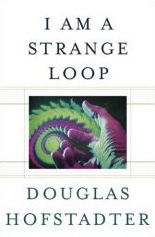
Hofstadter on the “strange loop” of self-awareness
The self-causing capacity of self-awareness has not just been noticed by philosophers with a metaphysical axe to grind. This capacity for self-causation, or at least the semblance thereof, has also been noted by the cognitive scientist Douglass Hofstadter, who focuses on self-referential structures (“strange loops”) as offering the key to the mystery of consciousness: “In the end, we are self-perceiving, self-inventing,
[...] little miracles of self-reference.” (Hofstadter 2007: 363) Commenting on the “strange loop” of self-awareness, Hofstadter notes how this seemingly implies its self-causation: “It is almost as if this slippery phenomenon called “self-consciousness” lifted itself up by its own bootstraps, almost as if it made itself out of nothing.” (Idem: xii)

But note Hofstadter's reservation: “almost as if”. What gets in the way of Hofstadter’s full endorsement of the bootstrapping of self-consciousness is his adherence to physicalism, which forbids self-causation. As a physicalist, Hofstadter takes consciousness to be ultimately reducible to physical processes (the brain interacting with its environment). Hence his conclusion that the self-causing aspect of self-awareness must be an illusion, because physical processes (as they take place in time) cannot be self-causing. Thus he takes the self-causing aspect of self-awareness to be ultimately an illusion, a “mirage” (idem: 363), a surface appearance produced by myriad micro-feedback processes in the brain, processes that obey the standard laws of physics: “The problem is that in a sense, an “I” is something created out of nothing. And since making something out of nothing is never possible, the alleged something turns out to be an illusion, in the end, but a very powerful one.” (Idem: 292)

But here the Hard Problem of Consciousness comes to our rescue. The Hard Problem of Consciousness shows the irreducibility of consciousness to physical and computational structures. This means that the self-producing structure of self-awareness need not be illusory simply because it is ruled out by physics. We see, therefore, that the Hard Problem of Consciousness opens the possibility that the self-causation of self-awareness is genuine.

Two common mistakes about Absolute Idealism
There are, however, two common mistakes about Absolute Idealism which stand in the way of its proper understanding and evaluation – mistakes which we therefore have to correct. These common prejudices are (1) that Absolute Idealism was first and foremost a creature of the 19th century, originating with the post-Kantian German Idealists (Fichte, Schelling and Hegel) and then taken up and developed further by the Anglo-American Idealists (Green, Bradley, McTaggart, Royce); and (2) that Absolute Idealism was subsequently, at the beginning of the 20th century, refuted by the founding fathers of Analytic Philosophy, Moore and Russell in particular, as well as by empirical science, and has since then become obsolete.

The Sanskrit term "Upanishad" means "sitting down near"
and refers to the student sitting down near the teacher
in order to receive esoteric teaching
As regards the first prejudice, it is easily dispelled by even a cursory glance at the millennia-long history of Absolute Idealism in both Western and Eastern philosophy. This history arguably began in ancient India, notably in the Vedantic philosophy of the Upanishads (around the 7th century BCE). From there it migrated to the West, where it reached its first fully mature form in the Neoplatonism of Plotinus (3rd century CE – it is quite possible that Plotinus was influenced by the Vedanta; see Bréhier 1958). To a large extent the post-Kantian German Idealists merely rediscovered / reconstructed this new type of Idealism inaugurated in the West by Plotinus (cf. Beierwaltes 2004). Plotinus, then, was not just the originator of the notion of self-causation in Western philosophy; he was also the first Western philosopher to make the Absolute-Idealist identification of the self-causing cause of reality with self-awareness.

Bertrand Russell (1872-1970):
"It was towards the end of 1898 that
Moore and I rebelled against both
Kant and Hegel. Moore led the way,
but I followed closely in his footsteps."
(Bertrand Russell, My Philosophical
Development
. London: Allen and
Unwin, 1959, p.42.)
Let us now turn to the second prejudice. Hasn’t Absolute Idealism been refuted by the founding fathers of Analytic Philosophy, Moore and Russell? And hasn’t it since then become obsolete? Well, histories of philosophy tend to present each new school of philosophy as arising by refutation of its predecessor, whereas the actual fact of the matter is often a lot more complicated. This holds no less for the “creation myth” of Analytic Philosophy, according to which the latter emerged by overthrowing the Absolute Idealism of the British Hegelians (who were the teachers of Moore and Russell). Recent historical scholarship has done much to discredit this triumphalist history. As Hylton notes in his Russell, Idealism, and the Emergence of Analytic Philosophy: “For every argument that Moore or Russell could mount against Idealism, there is an idealist reply which points out a distinction that is being neglected, or one that is drawn erroneously; an assumption smuggled in, or the sense of a term distorted.” (Hylton 1990: 105) In addition to this comes the fact that Absolute Idealism is currectly making something of triple comeback: two comebacks in Analytic Philosophy itself, and one comeback in contemporary physics. I will discuss these developments below.

The Normative Idealism of the Pittsburgh Hegelians
To begin with Analytic Philosophy, here we see Absolute Idealism return in both epistemology and the philosophy of mind. In epistemology we find the so called “Pittsburgh Hegelians” John McDowell and Robert Brandom, who have made a remarkable return to both Kant and Hegel by pointing out that conceptuality and rationality in general are intrinsically normative, having to do with how people
ought to think rather than with how they factually think. On the basis of this “normativity of the conceptual” they argue for a Hegelian form of conceptual holism, such that – to paraphrase Hegel – the truth lies only in the conceptual whole that includes empirical reality (cf. Redding 2007). For given the conceptually laden impact of empirical experience on thought, the empirical world must have a normative significance that cannot be accounted for in strictly physicalist terms. According to McDowell and Brandom, therefore, the empirical world turns out to have a normative-conceptual structure that is best understood in terms of Hegel’s Absolute Idealism, where there is nothing outside of conceptual whole of “Absolute Knowledge”. I hope to be able to say more about Pittsburgh Hegelianism in later posts on this blog.

From the Hard Problem of Consciousness to Absolute Idealism
In the philosophy of mind, as we have already noted, we see the Hard Problem of Consciousness (HPC) give rise to serious doubts concerning the physicalist ontology adopted by earlier analytic philosophers. As a result, the philosophical landscape has changed dramatically, from a thoroughly physicalist one, where consciousness was accorded no independent status apart from the physical, to a much more ambiguous landscape with different competing philosophical positions stressing the ontological independence of consciousness – positions such as Property Dualism, Russellian Monism, Panpsychism, Micropsychism, and Idealist Monism.

In this context Absolute Idealism, too, is being reconsidered as perhaps the best response to the HPC (cf. Sprigge 1983; Hutto 2000; D'Oro 2005). The simple but crucial point here is that if consciousness is irreducible to physical reality (as the HPC shows), then mind-body interaction is only possible if the converse reduction holds, i.e. if physical reality reduces to consciousness. But this claim, that physical reality reduces to consciousness, amounts to Idealist Monism. Therefore: the HPC + mind-body interaction = Idealist Monism. And Idealist Monism is only a few steps away from Absolute Idealism.

The mystery of mind-
body interaction
Let us consider the above argument in some more detail. On the one hand, the HPC shows that consciousness cannot be explained in exclusively physical terms, such as brain activity. Thus the HPC refutes physicalism. But how, then, do consciousness and physical reality interact? There is no denying that such interaction takes place. Stimulate the brain and as a result consciousness changes. Conversely, a conscious exertion of the will usually results in limbs moving etc. How is this mind-body interaction possible if physicalism is false? The HPC leaves open only two possibilities: either consciousness and physical reality are two mutually independent realms of reality (Dualism) or physical reality is ultimately explainable in terms of (i.e. reduces to) consciousness alone (Idealist Monism). But, clearly, Dualism cannot account for mind-body interaction. For how could two utterly different and mutually independent realities possibly interact? (See e.g. the absurdity of Descartes' pineal gland.) Thus, since the HPC leaves open only these two possibilities, Dualism and Idealist Monism, the latter option must be true – that is: physical reality must ultimately reduce to consciousness, because consciousness can obviously interact with consciousness.

In other words: if we conceive of physical reality as a kind of manifestation of consciousness itself, then mind-body interaction becomes unproblematic. For then this interaction is ‘simply’ a case of consciousness interacting with one of its own manifestations, thus with itself in a sense. Of course, there really is nothing ‘simple’ about such Idealist Monism, since we still need an account of
how consciousness produces the physical.

But Idealist Monism is not necessarily the same as Absolute Idealism. So how do we get from the former to the latter? Here the following consideration seems to be relevant. We already saw that the HPC saves the self-causation of self-awareness from the critique by physicalism. But the relation works the other way as well: the self-causation of self-awareness
explains the HPC, i.e. it explains why consciousness is irreducible to physical reality. From the self-causation of self-awareness, after all, we have to conclude that self-awareness is the self-causing cause of reality as such – in other words: consciousness (in the form of self-awareness) is the basic ‘stuff’ of which reality consists, reality’s most primitive constituent. From this it obviously follows that consciousness is irreducible: it cannot be explained in terms of anything besides itself. Consciousness can only be explained in terms of consciousness, ultimately in terms of self-awareness.

Thus, when Chalmers (1995: 200) writes: “There is nothing that we know more intimately than conscious experience, but there is nothing that is harder to explain”, he
thinks he is stating a paradox (“despite its intimacy, we can't explain consciousness”), whereas in fact he is stating the very explanation of consciousness’ irreducibility. For it is precisely the intimacy with which we know conscious experience (i.e. the self-evident experience of our own self-awareness, with its self-causing capacity) that explains why consciousness is reality’s most basic constituent.

John A. Wheeler (1911-2008)
The Absolute Idealism of Wheeler’s Self-Observing Universe
Beyond philosophy, moreover, we see Absolute Idealism return in contemporary physics (
the paradigm of empirical science, at least for most analytic philosophers), notably in John A. Wheeler's theory of the Self-Observing Universe. Drawing on Idealist tendencies in both quantum mechanics (the observer dependency of wave function collapse) and digital physics (the constitutive importance of information for physical reality), the theoretical physicist Wheeler argued that the totality of physical reality – i.e. the universe – brings itself into existence by evolving those conscious subjects whose scientific observations and binary yes/no questions give “tangible reality” to the mathematical structure which is the universe. As Paul Davies summarizes: “Conventional science assumes a linear logical sequence: cosmos → life → mind. Wheeler suggested closing this chain into a loop: cosmos → life → mind → cosmos.” (Davies 2006: 281)

Wheeler's U diagram of
the Self-Observing Universe
For Wheeler, then, the universe is the self-creating Absolute, the Whole that brings itself into existence through mediated self-observation (mediated, namely, by the observers existing in the universe). In this way Wheeler resurrected the core idea of Absolute Idealism (the self-creation of Absolute Self-Awareness) within the context of contemporary physics. To be sure, Wheeler's theory of the Self-Observing Universe is so far nothing more than a hypothesis, or rather – as Wheeler himself stressed – an “idea for an idea”. It is by no means yet an empirically testable hypothesis, let alone a well-established scientific theory. Nevertheless, the fact that it presents a distinct scientific possibility, worthy of further investigation, is acknowledged by many physicists. (I discuss Wheeler’s hypothesis of the Self-Observing Universe in more detail here and here.) All in all, then, Absolute Idealism is still a live option, both in philosophy and science.

References
-
Beierwaltes, Werner (2004), Platonismus und Idealismus. Frankfurt: Vittorio Klostermann.
-Br
éhier, Émile (1958), The Philosophy of Plotinus. Chicago: The University of Chicago Press.
-Chalmers, David (1995), “Facing Up to the Problem of Consciousness,” in:
Journal of Consciousness Studies 2(3): 200-19.
-(1996),
The Conscious Mind: In Search of a Fundamental Theory. New York and Oxford: Oxford University Press.
-Davies, Paul (2006),
The Goldilocks Enigma: Why is the Universe Just Right for Life? London: Penguin Books.
-D’Oro, Giuseppina (2005), “Idealism and the philosophy of mind,” in:
Inquiry 48 (5): 395-412.
-Gerson, Lloyd (2011), "Goodness, Unity, and Creation in the Platonic Tradition", in: John F. Wippel (ed.),
The Ultimate Why Question: Why Is There Anything at All Rather than Nothing Whatsoever?, pp. 29-42. Washington, D.C.: The Catholic University of America Press.
-Hofstadter,
Douglas (2007), I Am a Strange Loop. New York: Basic Books.
-Hutto, Daniel D. (2000),
Beyond Physicalism. Amsterdam: John Benjamins Publishing Company.
-Hylton,
Peter (1990), Russell, Idealism, and the Emergence of Analytic Philosophy. Oxford: Oxford University Press.
-Plotinus,
Enneads, translation by A.H. Armstrong, Loeb edition.
-Radhakrishnan,
Sarvepalli (1953), The Principal Upanishads. New York: Harper.
-Redding,
Paul (2007), Analytic Philosophy and the Return of Hegelian Thought. Cambridge: Cambridge University Press.
-Rosenblum, Bruce & Kuttner, Fred (2011),
Quantum Enigma: Physics Encounters Consciousness. Oxford: Oxford University Press.
-Royce, Joshiah (1899 [1959]),
The World and The Individual, First Series: The Four Historical Conceptions of Being. New York: Dover Publications.
-Schelling, F.W.J. (1800 [2001]),
System of Transcendental Idealism. Translated by Peter Heath. Charlottesville: University Press of Virginia.
-Sprigge, Timothy L.S. (1983),
The Vindication of Absolute Idealism. Edinburgh: Edinburgh University Press.